The warehouse you don't own: when the logistics partner is the biggest risk on the balance sheet
Field Notes – A permanent reference for the owner who outsourced the warehouse to focus on the business, and has not yet asked what happens if the warehouse goes bankrupt.
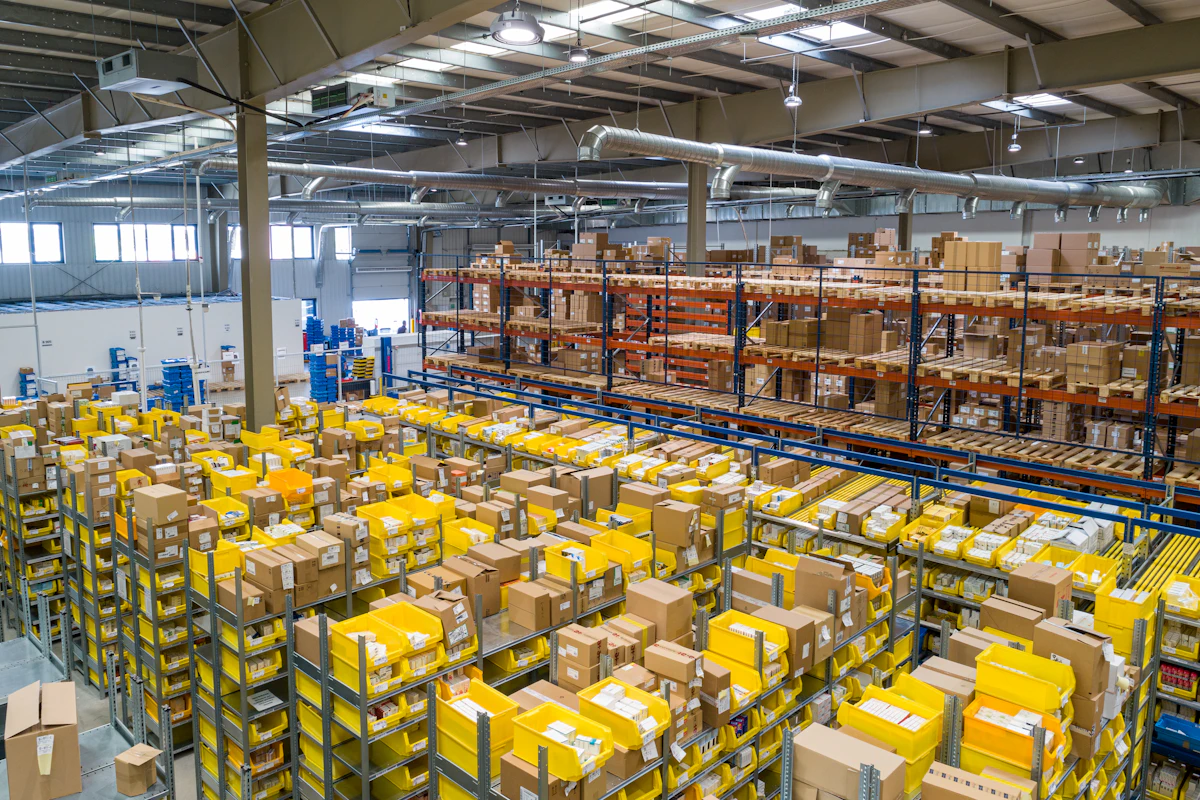
The stock is yours. The building, the forklift, the system that says where the stock is and the people who know, are somebody else's. That gap is the risk.
A distributor that outsources its warehouse or its transport has not removed logistics from the business; it has converted an operating function into a counterparty exposure, and most mid-market boards have never put that exposure on the risk register. In 2026 the counterparty is weaker than it was: 456 Belgian transport companies failed in the first half of the year, the highest half-year figure the sector has recorded, operating costs were six per cent above the year before, and the July increase in the kilometre charge added several thousand euros per truck per year. A logistics partner that fails does not just stop moving goods. It freezes the stock inside its building, its system and its receivables, and the distributor discovers, on a Friday afternoon, that the answer to "who owns what, and where is it" lives in a contract nobody has read since signature. The discipline that prevents this is not a bigger legal file. It is a monthly reconciliation, three clauses, and one drill.
Somewhere in the first five years of most distribution businesses there is a decision to stop owning the logistics. The warehouse goes to a third-party logistics provider, the trucks go to a haulier, and the management team gets its weekends back. On paper the business becomes lighter: no racking on the balance sheet, no forklift leases, no warehouse staff to schedule in August, a cost per pallet instead of a fixed cost per month. The P&L applauds. The owner, if he is honest, is relieved.
The decision is usually right. What is usually wrong is the belief that goes with it: that logistics has left the business. It has not. It has changed form. A function that used to be a line of operating cost and a set of people down the corridor is now a counterparty, and a counterparty has a balance sheet, a bank, an owner with his own problems, and a probability of failure that the distributor does not control and rarely measures.
This note is about that probability, what it does to a distributor when it materialises, and the small amount of discipline that keeps it from becoming the worst week of the year.
The counterparty is weaker than it was
Belgian road transport is having a bad year, and the numbers are not ambiguous. In the first six months of 2026, 456 transport companies failed, a rise of almost thirteen per cent on the same period of 2025 and the highest half-year total the sector has ever recorded. Most of them were not start-ups: well over half had been trading for more than five years, which is to say that they were the kind of established, mid-sized operator a distributor would reasonably have chosen. Across all sectors the country recorded more than six thousand bankruptcies in the half, also a record.
Three things are driving it. Operating costs in June were about six per cent higher than a year earlier, with wages indexed, diesel volatile and financing dearer since the central bank turned. The kilometre charge went up on 1 July; the sector federation puts the extra cost at roughly three thousand euros per truck per year for a domestic operator and up to twelve thousand for one that also runs through the Netherlands. And volumes are soft, because the distributors and manufacturers who hire the trucks are themselves carrying less stock and selling less of it.
Warehousing is not road transport, and the third-party logistics market has consolidated into a few large groups that are not going anywhere. But most mid-market distributors do not use those groups. They use a regional operator with two or three sites, a family owner, a bank facility secured on the building, and a customer list in which the distributor is somewhere between the third and the tenth account. That operator shares the cost base of the haulage sector, often runs trucks of its own, and is exactly the size at which a lost anchor customer or a refused refinancing ends the business.
The point is not that your logistics partner will fail. Most will not. The point is that the probability has moved, that it is now material enough to belong on the risk register next to customer concentration and the bank covenant, and that almost nobody has put it there.
What actually happens on the Friday
It is worth being concrete about the failure, because the abstract version ("supply chain disruption") hides the mechanics that decide how much it costs.
A logistics company does not usually fail quietly. There is a period of weeks in which invoices arrive late or in duplicate, in which a planner leaves and is not replaced, in which the Tuesday delivery becomes the Wednesday delivery. Then there is a day, usually a Friday, on which the trustee is appointed, the gates are closed and the warehouse management system is switched off or its licence lapses.
At that moment the distributor's stock is physically in a building it cannot enter, recorded in a system it cannot access, and described in a contract that may or may not establish that the stock is the distributor's at all. The trustee's first duty is to the estate, not to the customers; his first question is what belongs to whom, and his first instinct is to release nothing until he knows. If the logistics provider has unpaid invoices against the distributor, Belgian law may give the warehouse keeper a right of retention over the goods until those invoices are settled, which turns the distributor from an owner into a creditor negotiating for his own stock.
Meanwhile the distributor's customers have orders due. The sales team is promising deliveries that depend on pallets behind a locked gate. The ERP says the stock exists; the ERP is right, and it does not help. And the company has to find a new warehouse, move several thousand pallets into it, re-key the locations into a new system and re-establish the carrier integrations, all inside the two or three weeks that its customers will tolerate before they place the order elsewhere.
The cost of this is not the stock, which in most cases is eventually recovered. The cost is the four to eight weeks of broken service, the customers who do not come back, the emergency storage at spot rates, the working capital tied up in stock that cannot be sold while a second stock is bought to serve the market, and the two or three senior people who do nothing else for a quarter. For a twenty-million-euro distributor, a conservative estimate of a logistics-partner failure runs to a mid-six-figure cost and a year's lost growth, which is of the same order as the cost of losing the largest customer, and is not managed with a tenth of the attention.
The three clauses that decide everything
Almost none of this is determined on the Friday. It is determined by three clauses in the logistics contract, which were drafted by the provider's lawyer, accepted by the distributor's purchasing manager because the rate per pallet was good, and not read since.
Title and identification. The contract should state, without ambiguity, that goods held are the property of the distributor at all times, that they are to be stored identifiably and separately from the provider's own goods and from those of other customers, and that the provider has no right to pledge them, set them off or encumber them in any way. A clause that says the goods are "held on behalf of" the customer is not the same as one that says they are the customer's property. In a bankruptcy the difference is weeks.
Retention and set-off. The provider's standard terms will almost always reserve a right to retain goods against unpaid invoices. The distributor's job is to narrow it: retention only against undisputed invoices relating to those specific goods, with a defined cure period, and no retention at all against invoices under dispute. The practical defence is simpler still: never let a logistics provider's account run more than thirty days, whatever the agreed terms, because the balance outstanding on the Friday is the price of the key to the gate.
Exit and step-in. What happens on termination, insolvency or persistent service failure. The distributor needs the right to enter the premises and remove its goods with its own people and trucks on short notice; a copy of, or export rights over, the stock data in a usable format, delivered monthly rather than on request; the right to assume any sub-contracted transport or sub-leased space directly; and an agreed procedure for a stock count at exit. Every one of these rights exists only if it was negotiated before the provider needed it.
A fourth item is not a clause but an audit: the provider's own financial position. A distributor that asks its top ten customers for credit limits and never asks its logistics partner for its accounts has the risk review backwards. The partner's filed accounts are public, its credit rating costs a few hundred euros a year, and a covenant breach at the partner's bank is more likely to put your stock behind a locked gate than any event at your own.
The discipline: a reconciliation, a file, a drill
Contracts are the pre-condition. The operating discipline is what makes them usable, and it is three things.
The monthly three-way reconciliation. Every month, the stock per the ERP, the stock per the provider's warehouse system and the physical count or cycle count are reconciled line by line, and every variance is classified by cause: timing, damage, mis-pick, theft, or unexplained. This is a one-day exercise for a competent stock controller and most distributors do not do it, or do it annually, or let the provider do it alone. The reason to do it monthly is not only shrinkage. It is that on the Friday the trustee will accept one document as evidence of what belongs to you: a reconciled, signed stock list from the end of the previous month. A distributor that has one walks out with its pallets in days. One that has to reconstruct it from invoices walks out in weeks.
The exit file. One folder, maintained quarterly, that contains everything needed to move the warehouse in a fortnight: the contract with the three clauses marked, the last three reconciled stock lists, a current export of the stock data with locations and lot numbers, the carrier and customer delivery profiles, two alternative providers who have quoted in the last year, and the name of the lawyer who will write to the trustee on the Monday. The file is cheap. Its absence is what turns a bad week into a bad quarter.
The Friday drill. Once a year, preferably before the Q4 count, the management team spends two hours on one question: the gates close this afternoon, what do we do by Monday? Who calls the trustee, who calls the top twenty customers, where do the next three inbound containers go, which provider takes the overflow, how many days of stock sit in transit and in the shop, and how much working capital is tied up behind the gate. The exercise does not need a consultant and it usually produces, inside the first half hour, two findings that are fixed the same week.
None of this is new to the logistics directors of large groups. It is almost entirely absent at the size where it matters most, which is the distributor large enough to have outsourced everything and small enough to be the provider's fifth account.
The board question
For the chair the question is simpler than the operator's. It is: which single supplier, if it closed on a Friday, would stop us serving customers on Monday, and when did we last read its contract and its accounts?
For most distributors the honest answer is the logistics partner, and the honest answer to the second half is "at signature". That combination is a risk-register entry, a quarterly indicator, and a board agenda item in a year when the sector carrying the stock is failing at a record rate. It costs a day a month and a folder. It is also, incidentally, exactly the question a buyer's operational due diligence team will ask in 2028, and a distributor that answers it with a reconciled stock list and a marked-up contract has just demonstrated something about how it is run.
What to do Monday morning
Ask for the logistics contract and read three clauses: title, retention, exit. If any of them is missing or one-sided, open the conversation with the provider this quarter, when you are a customer in good standing, not next year when you may be a creditor.
Ask the finance director for the provider's latest filed accounts and a credit report, and for the balance currently outstanding on its account. If the balance is over thirty days, pay it; it is the cheapest insurance in the business.
Ask the stock controller for the last three-way reconciliation. If it is older than a month, or if the provider produced it alone, that is the first item on the Q4 count plan.
Then put two hours in the diary for the Friday drill, before the year-end count, with the sales director in the room. The stock is yours. Make sure that, on the day it matters, you can prove it, reach it and move it.
Photo: Unsplash

Each note, the day it publishes.
One email per Field Note, in your own language, sent when the piece goes live. No schedule to keep, no marketing, and nothing else is ever sent to this address.
Keep reading.
EBITDA quality in a stagflation year: what a buyer sees that the owner doesn't
EBITDA became the mid-market's favourite number because it is the one everybody can agree on: the bank…
Pay transparency: three good reasons to wait, and three better reasons not to
Belgium missed the 7 June 2026 deadline to transpose the EU Pay Transparency Directive and asked for six…
Start with thirty minutes.
If the notes are useful, the conversation usually is too.